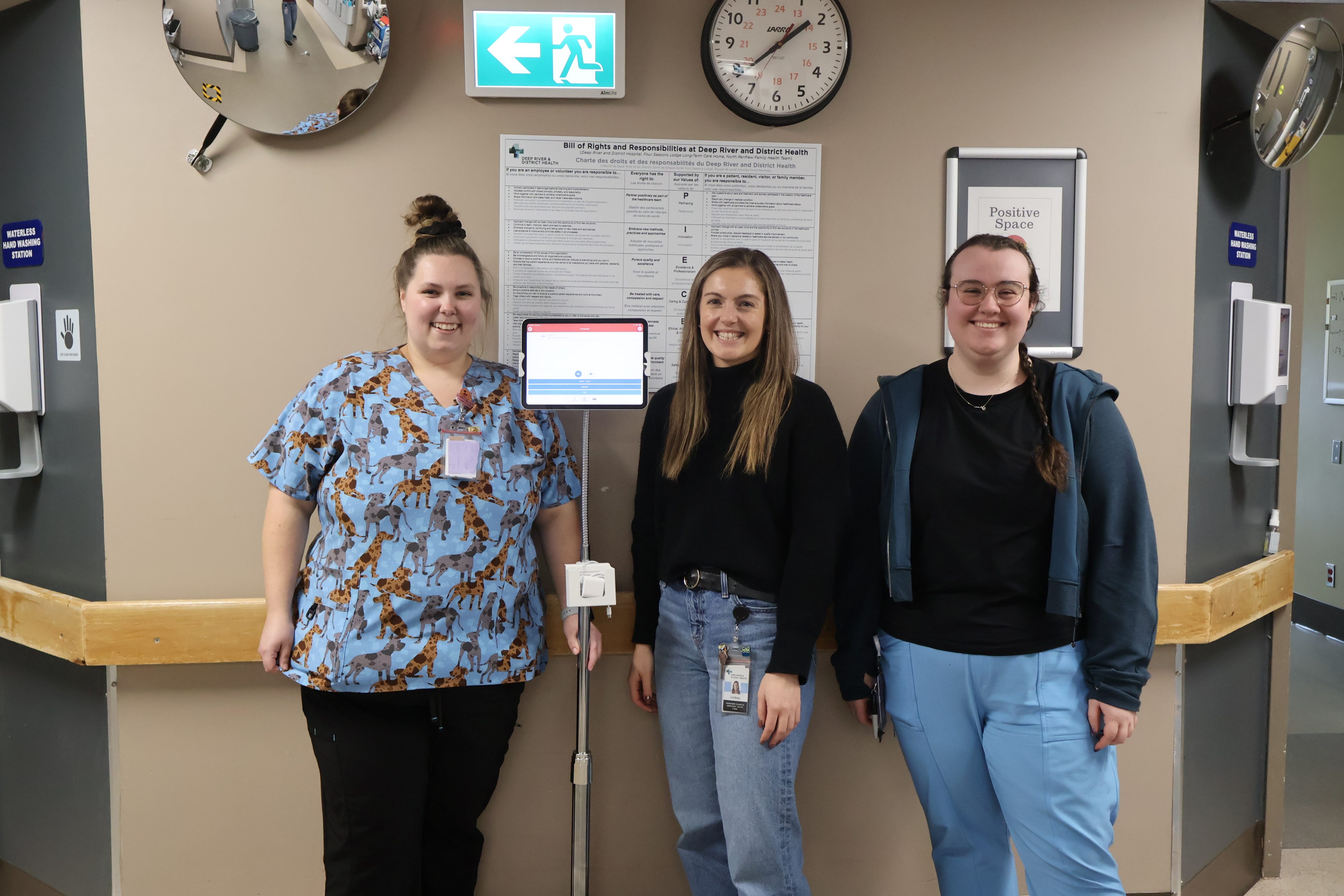
Photo supplied by Deep River and District Health
Deep River and District Health (DRDH) is introducing enhanced interpretation technology to help patients, residents and families overcome language barriers when accessing healthcare.
The new application, launched November 4, 2026, builds on interpretation services first introduced by the organization in 2024. It gives healthcare teams improved access to professional interpreters in more than 200 languages, including several Canadian Indigenous languages and sign language interpretation.
DRDH says the technology will help patients communicate with healthcare providers in their preferred language, supporting safer, more accessible and culturally inclusive care.
The ability to communicate clearly is particularly important when discussing symptoms, understanding diagnoses, reviewing medications, making treatment decisions or planning care at home.
“Language should never be a barrier to receiving safe, compassionate healthcare,” said Meagen Boisvenue, DRDH’s vice-president of clinical services and chief nursing executive.
Boisvenue says the enhanced technology builds on the organization’s experience with interpretation services over the past two years, helping healthcare teams better support patients and strengthen patient safety.
The application will be available across the entire DRDH health campus, including Deep River and District Hospital, the North Renfrew Family Health Team, Four Seasons Lodge Long-Term Care Home and the Community Access to Long Term Care Campfire Program.
One of the improvements is the ability to arrange interpretation services ahead of scheduled appointments. Patients and families who anticipate needing assistance can contact their healthcare team in advance to help ensure an interpreter is available for their visit.
DRDH says the inclusion of several Canadian Indigenous languages, along with hundreds of other languages and sign language interpretation, is intended to address the diverse communication needs of the communities it serves.
Boisvenue says ensuring patients can express themselves, ask questions and participate in decisions about their healthcare helps build trust and create a more inclusive care environment.
Patients, residents and families are encouraged to ask DRDH staff about interpretation services whenever they are needed, either during a healthcare visit or through advance arrangements.
The organization says the investment is part of its ongoing commitment to equitable, person-centred healthcare and ensuring people can access quality care close to home.
(Steve Berard)